The most significant development in recent times has been the lodgement of a case for paramedic prescribing by the Te Kaunihera Manapou | Paramedic Council (Te Kaunihera). https://tinyurl.com/44ahvp2b
The application from Te Kaunihera seeks approval under the Medicines Act 1981 to introduce designated prescribing authority for paramedics. If approved, registered paramedics who complete approved postgraduate prescribing education and meet defined competence requirements would be able to prescribe a specified list of medicines within a regulated scope of practice.
This is a targeted regulatory change designed to improve access, equity, and continuity of care while maintaining strong patient safety protections and making better use of New Zealand’s paramedic workforce.
The case for change is underpinned by rising demand for urgent and primary care, persistent inequities in access – particularly for Māori, Pacific peoples, and rural communities – and recognition that highly educated paramedics now work across emergency, primary, community, aged care, and telehealth settings.
Despite this expanded role, paramedics currently cannot prescribe and must rely on standing orders, which were not designed for contemporary community-based practice, leading to fragmented accountability, variation, and administrative burden.
The proposed model adopts a proportionate, staged designated prescriber approach. Prescribing would be limited to a specified medicines list approved by the Director-General of Health. Non-prescribing paramedics would continue operating under standing orders.
Expected benefits include assessment, treatment and prescribing within a single episode of care; improving access and equity; reducing administrative burden; supporting more efficient use of health resources; and strengthening workforce retention through advanced practice pathways.
Safety safeguards are central to the proposal, including approved education pathways, supervision, ongoing CPD, clinical governance, and existing HPCA Act fitness-to-practise mechanisms.
Wide consultations showed strong support for the move, with 88% of 197 respondents to the formal consultation backing paramedic prescribing, rising to 92% support among paramedics only.
Implementation would be phased, with Extended Care Paramedics (ECPs) likely first, given their established autonomous practice. Te Kaunihera will work with Manatū Hauora and Te Whatu Ora to develop education, systems, and the specified medicines list.
Looking further at the profession, an update of the paramedic workforce using data from 16 April 2026 indicates there are now 2754 registered practitioners. (This differs slightly from the reported total of 2729 which may be a typographical error. ) https://tinyurl.com/yc24fj8m
The prescribing submission may be considered in conjunction with the specialist paramedic endorsements which continue to grow. Endorsed paramedics now number 387 or 14.1% of registrants. https://tinyurl.com/yk7w5xj4
Applications for specialist endorsement are ongoing, and these numbers will increase as more applications are received and processed. https://tinyurl.com/5ecwbrez



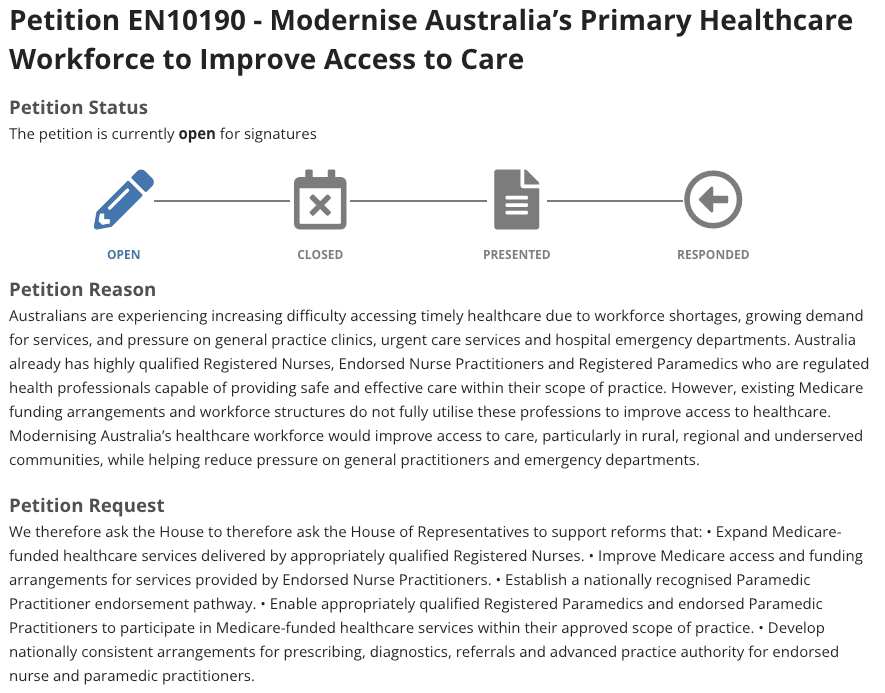


lodgement of a case for paramedic prescribing by the Te Kaunihera Manapou | Paramedic Council (Te Kaunihera)
The most significant development in recent times has been the lodgement of a case for paramedic prescribing by the Te Kaunihera Manapou | Paramedic Council (Te Kaunihera). https://tinyurl.com/44ahvp2b
The application from Te Kaunihera seeks approval under the Medicines Act 1981 to introduce designated prescribing authority for paramedics. If approved, registered paramedics who complete approved postgraduate prescribing education and meet defined competence requirements would be able to prescribe a specified list of medicines within a regulated scope of practice.
This is a targeted regulatory change designed to improve access, equity, and continuity of care while maintaining strong patient safety protections and making better use of New Zealand’s paramedic workforce.
The case for change is underpinned by rising demand for urgent and primary care, persistent inequities in access – particularly for Māori, Pacific peoples, and rural communities – and recognition that highly educated paramedics now work across emergency, primary, community, aged care, and telehealth settings.
Despite this expanded role, paramedics currently cannot prescribe and must rely on standing orders, which were not designed for contemporary community-based practice, leading to fragmented accountability, variation, and administrative burden.
The proposed model adopts a proportionate, staged designated prescriber approach. Prescribing would be limited to a specified medicines list approved by the Director-General of Health. Non-prescribing paramedics would continue operating under standing orders.
Expected benefits include assessment, treatment and prescribing within a single episode of care; improving access and equity; reducing administrative burden; supporting more efficient use of health resources; and strengthening workforce retention through advanced practice pathways.
Safety safeguards are central to the proposal, including approved education pathways, supervision, ongoing CPD, clinical governance, and existing HPCA Act fitness-to-practise mechanisms.
Wide consultations showed strong support for the move, with 88% of 197 respondents to the formal consultation backing paramedic prescribing, rising to 92% support among paramedics only.
Implementation would be phased, with Extended Care Paramedics (ECPs) likely first, given their established autonomous practice. Te Kaunihera will work with Manatū Hauora and Te Whatu Ora to develop education, systems, and the specified medicines list.
Looking further at the profession, an update of the paramedic workforce using data from 16 April 2026 indicates there are now 2754 registered practitioners. (This differs slightly from the reported total of 2729 which may be a typographical error. ) https://tinyurl.com/yc24fj8m
The prescribing submission may be considered in conjunction with the specialist paramedic endorsements which continue to grow. Endorsed paramedics now number 387 or 14.1% of registrants. https://tinyurl.com/yk7w5xj4
Applications for specialist endorsement are ongoing, and these numbers will increase as more applications are received and processed. https://tinyurl.com/5ecwbrez
Recent Posts
Archives
Categories